What Counts as Knowledge?
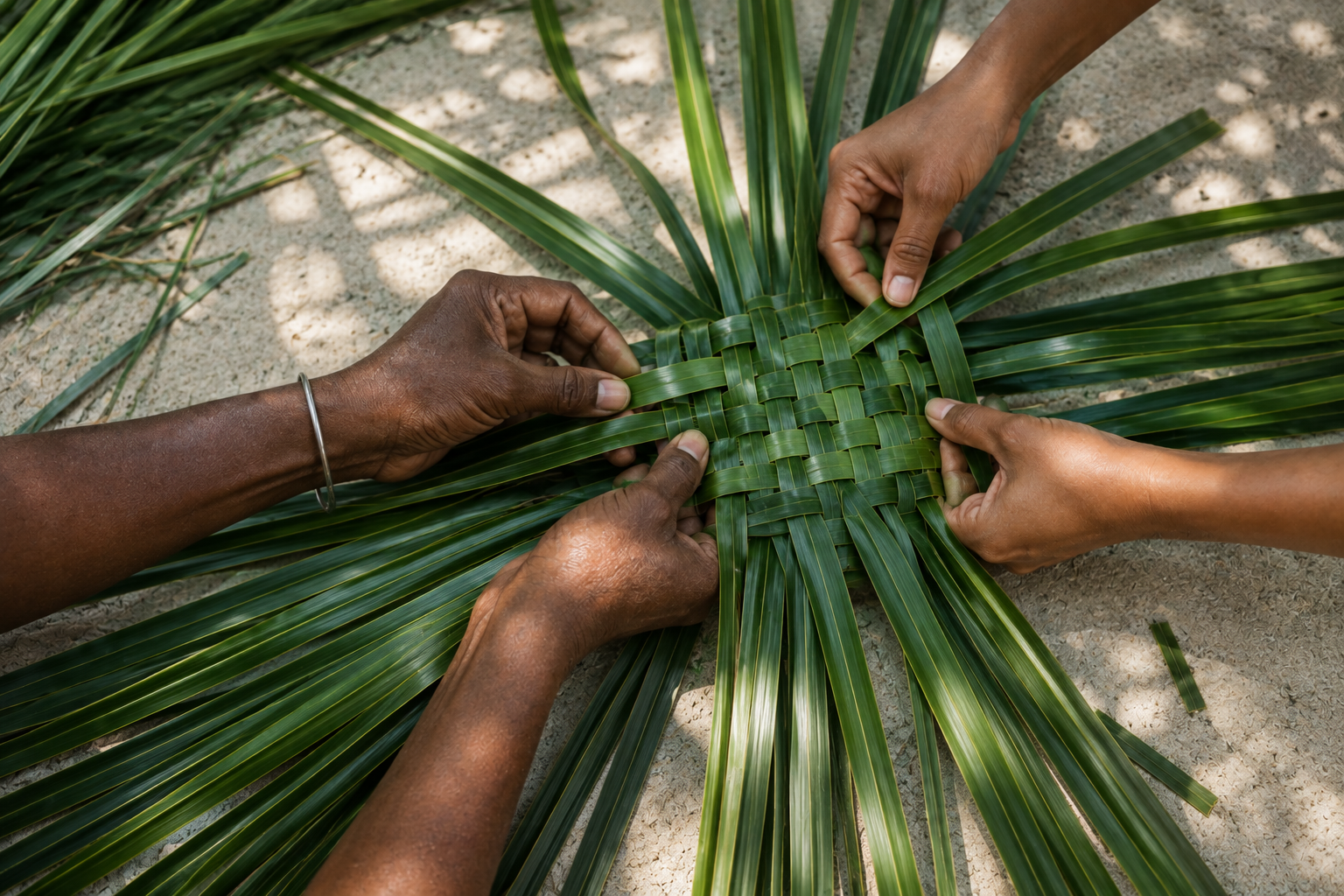
International Day of the World’s Indigenous Peoples is an opportunity to celebrate the world’s oldest continuing cultures. It should also prompt organisations to consider a more difficult question: what do we recognise as knowledge, and whose knowledge carries weight when decisions are made?
Each year, International Day of the World’s Indigenous Peoples shines a light on the strength, resilience and continuing knowledge of Indigenous communities around the world. Organisations will acknowledge culture, connection to Country, language and identity, and those acknowledgements matter when they are grounded in genuine relationships rather than treated as an annual communications exercise.
There is, however, a risk in the way this knowledge is often discussed, particularly when it is framed as something inherited from the past rather than something that continues to shape the present.
When First Nations knowledge systems are presented primarily as cultural or historical, their continuing role in contemporary decision-making can be overlooked. Knowledge held by Traditional Custodians continues to inform land management, governance, health, infrastructure, economic development and community life. It has not remained relevant simply because it has endured, but because it continues to be practised, tested and refined by the people who hold it.
The more useful question, then, is not whether this knowledge still exists, but whether our institutions have learned how to recognise it.
Despite genuine progress, many organisations still engage with First Nations knowledge at the edges of decision-making. Communities may be invited into a conversation after the project has already been defined, the commercial parameters established and the preferred direction largely settled. In those circumstances, engagement becomes an opportunity to respond to a system rather than shape it, even where the organisation involved has a genuine intention to listen and improve.
This is rarely a question of poor intent. More often, it reflects assumptions embedded in the systems through which organisations assess credibility, authority and evidence. Most institutions have been designed around familiar ways of establishing knowledge, placing confidence in information that can be documented, measured, analysed and attributed to recognised professional expertise.
Technical reports, legislation, research, modelling and policy advice all have an established place in decision-making because they are the forms of evidence our institutions were designed to understand.
There is nothing inherently wrong with this. Good decisions require evidence that can be examined, challenged and communicated clearly. The difficulty arises when these become the only forms of knowledge an organisation knows how to recognise, because every system carries assumptions about what counts as evidence, and most of us inherit those assumptions long before we have reason to question them.
First Nations knowledge systems may begin from a different understanding of how knowledge is formed and held. Knowledge can sit within relationships between people, Country, waters, ancestors, seasons and future generations, while authority may come not only from qualification or profession, but from cultural responsibility, lived experience, connection to place and accountability to others. Within this context, knowledge is not simply information that someone possesses.
It may also carry obligations around who can hold it, who can share it, how it can be used and what responsibilities follow from acting upon it.
These differences become visible in the way organisations make decisions. A technical report may be readily accepted as evidence, while knowledge shared by Traditional Custodians is described as a perspective. Data gathered over a relatively short period can be given greater institutional weight than observations carried and refined across generations. Written documentation is often accepted without question, while knowledge carried through generations is expected to justify itself again and again.
Different questions reveal different knowledge
One way to understand this difference is to look at the questions our systems instinctively ask. Most organisations begin with questions such as:
- What can we measure?
- What does the data tell us?
- Who is professionally qualified?
- What legislation or policy applies?
- How do we minimise risk?
These are important questions. They underpin governance, accountability and good decision-making, but they are not the only questions that may be needed to understand a problem fully.
First Nations knowledge systems may also begin by asking:
- What relationships need to be understood?
- What is Country telling us?
- Who holds the cultural authority to speak?
- Who will inherit the consequences of this decision?
- What responsibilities come with acting on this knowledge?
These questions are no less rigorous. They reflect a different understanding of how evidence is established, how authority is recognised and what good decision-making requires. The distinction is not that one approach values evidence while the other does not, but that each may recognise different forms of evidence and different responsibilities arising from its use.
The strongest organisations are therefore not those that choose one approach over the other, but those capable of drawing from both. Technical knowledge may explain how something can be built, while knowledge of Country may reveal whether it should be built in that place, in that way and with what consequences. Economic modelling may identify an opportunity, while community knowledge may expose risks, relationships or long-term impacts that the model has not captured.
Each can illuminate a different dimension of the same decision.
This is becoming increasingly important as organisations respond to complex questions around climate, infrastructure, procurement, artificial intelligence and long-term community wellbeing. These challenges cannot be resolved through technical capability alone because they also require an understanding of place, consequence, relationship and responsibility.
Knowledge carried through care
This year’s International Day of the World’s Indigenous Peoples recognises Indigenous midwives and their role in safeguarding life, knowledge and wellbeing. Their work demonstrates that knowledge is not only something recorded in clinical guidance or held through professional qualification. It can also be carried through relationships, cultural understanding, observation, trust and responsibility to families and community.
The Malabar Midwives Midwifery Group Practice in Sydney offers a practical example of what can happen when an institution creates space for these forms of knowledge to work together. Established following consultation with the local Aboriginal community, the service combines clinical midwifery expertise with continuity of care, cultural understanding and strong community relationships. Midwives work alongside an Aboriginal Health Education Officer, with women supported by known midwives throughout pregnancy, birth and the early postnatal period. Care can take place in hospital, in community settings and, where appropriate, through visits with families at home.
What makes the model significant is not simply that it provides a culturally safe service within an existing health system. It recognises that trust, familiarity, accessibility and an understanding of a family’s cultural and community context are not secondary considerations surrounding clinical care. They are part of the knowledge required to deliver that care well. The model also demonstrates that recognising different forms of knowledge does not require institutions to abandon evidence, standards or professional expertise. It requires them to understand that technical knowledge becomes more effective when it is applied alongside relationships, cultural authority and the knowledge held by the communities being served.
That lesson extends well beyond maternity care.
The question for organisations is whether they are prepared to engage with First Nations knowledge as expertise rather than simply acknowledge it as culture. Doing so requires more than inviting an Indigenous person into the room. It requires organisations to examine who defined the problem, what evidence will be accepted, when First Nations knowledge is introduced and whether there is still a genuine opportunity for it to shape the outcome.
At Tika EQ, we often say that better outcomes begin with better questions. One of the most important questions an organisation can ask is whether it has unintentionally limited its own understanding by recognising only the forms of knowledge its systems were originally designed to accommodate. International Day of the World’s Indigenous Peoples is therefore not only an opportunity to celebrate the endurance of the world’s oldest continuing cultures. It is also an opportunity to examine the assumptions built into our own institutions and the way those assumptions continue to shape whose expertise is trusted.
Perhaps the greatest barrier to Indigenous participation is not access to knowledge at all, but the systems we have built to decide what counts as knowledge in the first place.